Building a Top-Notch Finance Team: Hiring Tips

Building a Top-Notch Finance Team: Hiring Tips


In today’s quick-changing financial landscape, creating a stellar finance team is crucial for company success. Here are key strategies to hire and develop a finance team that can propel your company forward:


  • Define Clear Job Requirements


Before you begin recruitment, outline the specific skills, qualifications, and experience required for each position. Consider both technical expertise and soft skills that align with your company culture and team dynamics.


  • Employ Data-Driven Recruitment


Implement analytics and AI tools to streamline your hiring process. This technology can help identify top candidates, reduce bias, and improve the overall quality of new hires.


  • Focus on Diversity and Inclusion


A finance team with diverse backgrounds brings new ideas and unique problem-solving approaches. Use fair hiring practices to attract qualified professionals from various backgrounds.


  • Check Cultural Fit


Technical skills matter, but how well a candidate fits your company culture is important for long-term success. Use behavioral interviews and personality assessments to ensure candidates align with your company’s values and work environment.


  • Focus on People Skills


Look beyond technical expertise and value people skills such as effective communication, adaptability, and leadership potential. These skills have growing importance in today’s finance roles that require cross-departmental collaboration.


  • Offer Competitive Compensation and Benefits


Match what others in your field pay and provide attractive salary packages. Consider adding performance-based bonuses, stock options, and other financial incentives to draw the best talent.


  • Boost Career Growth Opportunities


Top finance professionals often seek opportunities to develop and advance. Demonstrate your company’s commitment to help employees progress by offering guidance and outlining clear paths for career advancement.


  • Streamline and Enhance the Interview Process


Develop a clever and engaging interview process that respects candidates’ time while still assessing their skills . Consider using real-world scenarios or practical tasks to evaluate their problem-solving abilities.


  • Leverage Employee Networks


Talk to your finance team about good people they know. When staff members suggest someone, you often get better hires who mesh well with your current team.


  • Partner with Specialised Recruiters


Join forces with job agencies that zero in on finance and accounting roles. These allies can tap into their vast networks to find candidates with rare skills and backgrounds.


  • Highlight Your Company’s Mission and Impact


Top finance experts often seek meaningful work. Explain how your company’s financial strategies support broader business objectives and contribute to society.


  • Create a Robust Onboarding Program


After you hire top talent, set them up for success with a comprehensive onboarding program. This should cover technical training and introduce them to the company culture.


  • Consider Remote Work and Flexible Arrangements


Since the pandemic many finance professionals value flexibility. Offering remote or hybrid work setups can expand your talent pool and attract high-quality candidates.


  • Leverage Social Media and Professional Networks


Maintain an active presence on platforms like LinkedIn to showcase your company culture and draw in passive candidates. Engage with finance communities and share expert insights.


  • Conduct Regular Skills Gap Analysis


assess your team’s capabilities against evolving industry demands. Use these findings to guide your hiring strategy and identify areas where you need additional expertise.


When you put these plans into action, you can build a finance team that handles today’s needs and is set to tackle tomorrow’s challenges. Remember making a top-notch team is a never-ending job that requires ongoing effort, tweaks, and investment in your staff.


Portrait of Morgan Taylor beside text - Reward, Compensation & benefits: Why Market Insights Matter
By Shazamme System User July 22, 2026
Discover why up-to-date market insights are essential for shaping competitive reward, compensation and benefits strategies that attract, retain and motivate top talent.
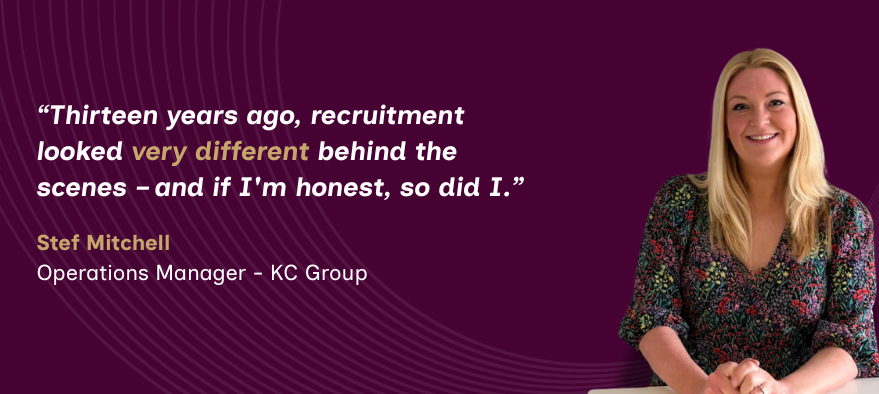
Woman smiling beside a white quote on a purple gradient background, promoting a personal testimonial.
By Stefanie Wainwright June 24, 2026
From paper CVs to AI, discover how recruitment operations have transformed over the last 13 years and why people, their trust and relationships still matter most.
Smiling person with blond hair and a dark sweater against a blue background
By Mark Higgs June 23, 2026
The finance recruitment market isn’t slowing down - it's becoming more selective. Discover key trends shaping hiring, skills demand, and candidate success.
Person wearing headphones and a plaid shirt working at a desk with papers and a laptop, smiling in a brick-walled room
May 6, 2026
An overview of the UK temporary recruitment market, what current trends mean for candidates, and practical tips to navigate temp work successfully.
By Shazamme System User March 4, 2026
Kirsty Chan Divisional Director - Business Operations 
By Shazamme System User February 3, 2026
Let’s be honest – the recruitment market has changed.

By Mitali Ratnaparkhi November 5, 2025
Is Your Workforce Future-Ready?
A woman is holding a box with her belongings in it.
April 10, 2025
Nearly a quarter (23 percent) of UK workers plan to leave their jobs within the next three years, a 3 percent increase from 2023. Additionally, another 13 percent do not see themselves working for their current employer through 2026. According to Culture Amp, an employee experience provider, this insight into employee attrition comes from the analysis of ‘Commitment to Stay’ data from 97 million (ten million of which came from the UK) responses of employees across 5000 (one thousand UK-based) organisations, gathered from responses to 97 million questions. UK workers are more likely to consider quitting than their counterparts in other leading Western economies, with only 19 percent of American workers and 18 percent of Australians considering resignation. The only country to surpass it was Germany, where 24 percent are planning to move on by 2025. According to CultureAmp, replacing an employee costs 30 percent of an average employee’s salary, but rises to 200 percent for top performers when recruitment fees, productivity, and team impacts are taken into account. Employers may need to pay between £11,229 and £74,860 to replace departing employees in 2024, with the average salary in the UK being £37,430. According to Culture Amp data gathered from over three million employees at 4700 companies around the world, other factors may influence employee attrition in 2025. Among the most critical determinants of ‘commitment to stay’ among employees, leadership quality outweighed the influence of managers, because employees closely associate strong leadership with an organisation that has a clear direction and performs well. In the presence of a great manager and a great leader, employees’ commitment to stay reaches 94%; in the absence of a great manager and a great leader, it drops to 35%, while in the absence of a great manager and a poor leader, it plummets to 19%. The company’s global data also shows that employee turnover increases more after a change of leader than after a managerial change. The attrition rate for teams that have seen a change at the top is 40 percent higher within six months. On the other hand, a change in manager only results in a 16% attrition rate. “As Europe faces ongoing political, economic, and social/workplace uncertainties in 2025, organisations must prioritise their strategic workforce management in this unpredictable post-pandemic landscape. The critical challenge remains employee retention, which directly impacts organisational performance,” says Nick Matthews, general manager, EMEA, at Culture Amp. “Our research challenges the traditional notion that employees simply leave bad managers. It’s imperative that organisations leverage their leadership layer in conjunction with their front line managers to ensure that they have a coherent and strategic focus on employee experience as they navigate 2025’s challenges.” Contact the KC Group now for support with your career. View our latest jobs.
A roll of money with the number 5 on it
April 10, 2025
Salary Negotiation Tips for Payroll Professionals In today’s dynamic landscape of finance and HR, payroll professionals ensure accurate and timely compensation for employees. As your career advances, advocating for better remuneration becomes crucial. At the KC Group, with our extensive experience in payroll recruitment and consultancy across the UK, we’ve compiled valuable insights to help payroll professionals navigate salary negotiations effectively. 1. Research Market Rates Before initiating compensation discussions, thoroughly research industry salary standards. Consider factors such as: Your tenure with the organisation The organisation’s size and scope Geographical location Role requirements and responsibilities Utilise resources like Glassdoor, PayScale, and professional payroll associations to benchmark compensation for comparable positions. 2. Highlight Your Unique Value Payroll expertise extends beyond numerical proficiency. Emphasise your distinctive capabilities and background: Proficiency in specific payroll software systems In-depth knowledge of complex tax regulations Experience with multi-site or international payroll Professional certifications Interpersonal and problem-solving abilities 3. Quantify Your Achievements Statistical evidence carries significant weight in salary negotiations. Prepare concrete examples demonstrating your impact: Percentage reduction in payroll processing errors Cost savings through process optimisation Volume of employees managed in payroll systems Successful implementation of payroll technologies 4. Consider the Complete Package Remember that salary is one component of your total compensation. Be prepared to discuss additional benefits such as: Flexible working arrangements Enhanced holiday allowance Professional development opportunities Performance-based incentives Health and wellness benefits 5. Perfect Your Presentation Confidence is essential during negotiations. Rehearse your talking points and anticipate potential objections. Consider role-playing with a trusted colleague or mentor to refine your approach. 6. Time Your Discussion The timing of your negotiation can significantly impact its outcome. Consider initiating the conversation: During annual performance reviews Following successful project completion Upon assuming additional responsibilities When presented with external opportunities 7. Maintain Professionalism Approach the discussion with a positive mindset and demeanour. Demonstrate how your increased compensation benefits both you and the organisation. 8. Develop Alternative Options Prepare contingency plans if your desired salary isn’t achievable. Consider alternatives such as: Scheduled compensation reviews Performance-linked bonuses Enhanced benefits package Professional development opportunities At the KC Group, we understand the intricacies of payroll career progression and regularly assist professionals in achieving their compensation goals through our specialist recruitment services and industry expertise. 9. Get It on Paper Once an agreement is reached, ensure all details are formally documented. This documentation should encompass your revised compensation, any modifications to your benefits package, and the implementation timeline for these changes. 10. Keep Getting Better Remember that salary negotiations are an ongoing aspect of your professional journey. Continuously enhance your expertise, remain current with industry developments, and maintain a detailed record of your accomplishments. These practices will strengthen your position in future compensation discussions. By implementing these strategies, you’ll approach salary negotiations with enhanced confidence as a payroll professional. You’ll also be better positioned to secure compensation that reflects your valuable skills and expertise. As someone responsible for managing others’ compensation at the KC Group, you’re uniquely qualified to advocate for your own financial advancement and career progression within the organisation.
Two people are sitting at a table using laptops and tablets
April 10, 2025
Securing a finance position can be challenging. But as experts here at the KC Group we’ll explain how to distinguish yourself and make a lasting impression on potential employers, thorough preparation is essential. Here’s valuable guidance from hiring managers to help you succeed in your finance job interview. 1. Look into the Company and Job Prior to your interview, thoroughly research the company’s: Financial reports and performance metrics Recent news coverage and corporate announcements Organisational values and workplace environment Products or services portfolio Understanding the role you’re pursuing is equally important. Analyse the job description and prepare to demonstrate how your capabilities align with the position requirements. 2. Review Your Industry Knowledge Stay current with: Latest financial regulations and legislation Market trends and economic indicators Industry developments and updates Financial technology innovations Demonstrating industry awareness showcases your dedication and passion for the financial sector. 3. Go Over Financial Ideas Revise fundamental finance concepts relevant to the role, including: Financial modelling and analysis techniques Core accounting principles Risk management strategies Investment methodologies Budgeting and forecasting approaches Be prepared to discuss these concepts and share examples from your professional or academic experience. 4. Get Ready for Common Job Questions Practise responses to typical finance interview questions such as: “Please explain how the three financial statements interconnect” “What methods do you use for company valuation?” “What’s your approach to risk management?” “How do you maintain awareness of financial regulations?” Prepare concise responses incorporating real-world examples from your experience. 5. Create Your “Tell Me About Yourself” Story Develop a compelling narrative highlighting: Your educational background Relevant work experience Key achievements Your passion for finance Your interest in the role and organisation Keep it concise (2-3 minutes) and rehearse until it flows naturally. 6. Think Up Questions to Ask Them Demonstrate engagement by preparing thoughtful questions about: The organisation’s financial strategy Team structure and dynamics Career development opportunities Industry and organisational challenges 7. Show Off Your Tech Skills Be prepared to demonstrate proficiency in: Excel and financial modelling Industry-standard financial software (like Bloomberg FactSet) Data analysis tools Programming languages (if required) Some interviews may include practical assessments or case studies, so ensure you’re prepared to showcase your abilities. 8. Put Numbers to Your Successes When discussing your achievements, utilise precise metrics to demonstrate your impact: Enhanced efficiency or accuracy percentages Cost savings or revenue generation figures Portfolio management values Number of successfully delivered projects 9. Select Appropriate Attire The financial sector maintains traditional standards. Opt for professional attire: Well-tailored suits in conservative colours Polished formal footwear Minimal accessories Professional grooming standards 10. Mind Your Non-verbal Communication Your body language conveys significant messages: Maintain appropriate eye contact Offer a firm, professional handshake Maintain good posture Present composed demeanour Display active listening through appropriate responses 11. Prepare Your References Compile a list of professional contacts including: Previous supervisors Professional colleagues Academic referees (for recent graduates)  Inform your references about potential enquiries. 12. Follow Through Post-interview actions matter: Send a thank-you correspondence within 24 hours Reiterate your enthusiasm for the position Reference specific discussion points to remain memorable By implementing these recommendations from hiring professionals, you’ll be well-prepared for your finance interview. Remember, confidence stems from thorough preparation, so invest time in these aspects to enhance your prospects of securing your desired finance position.